
The First Step in Data Automation: Making the Process Visible
Mapping the existing process before automating it is the most critical stage of any project. The three layers to map and the comparison that shows why planning wins.
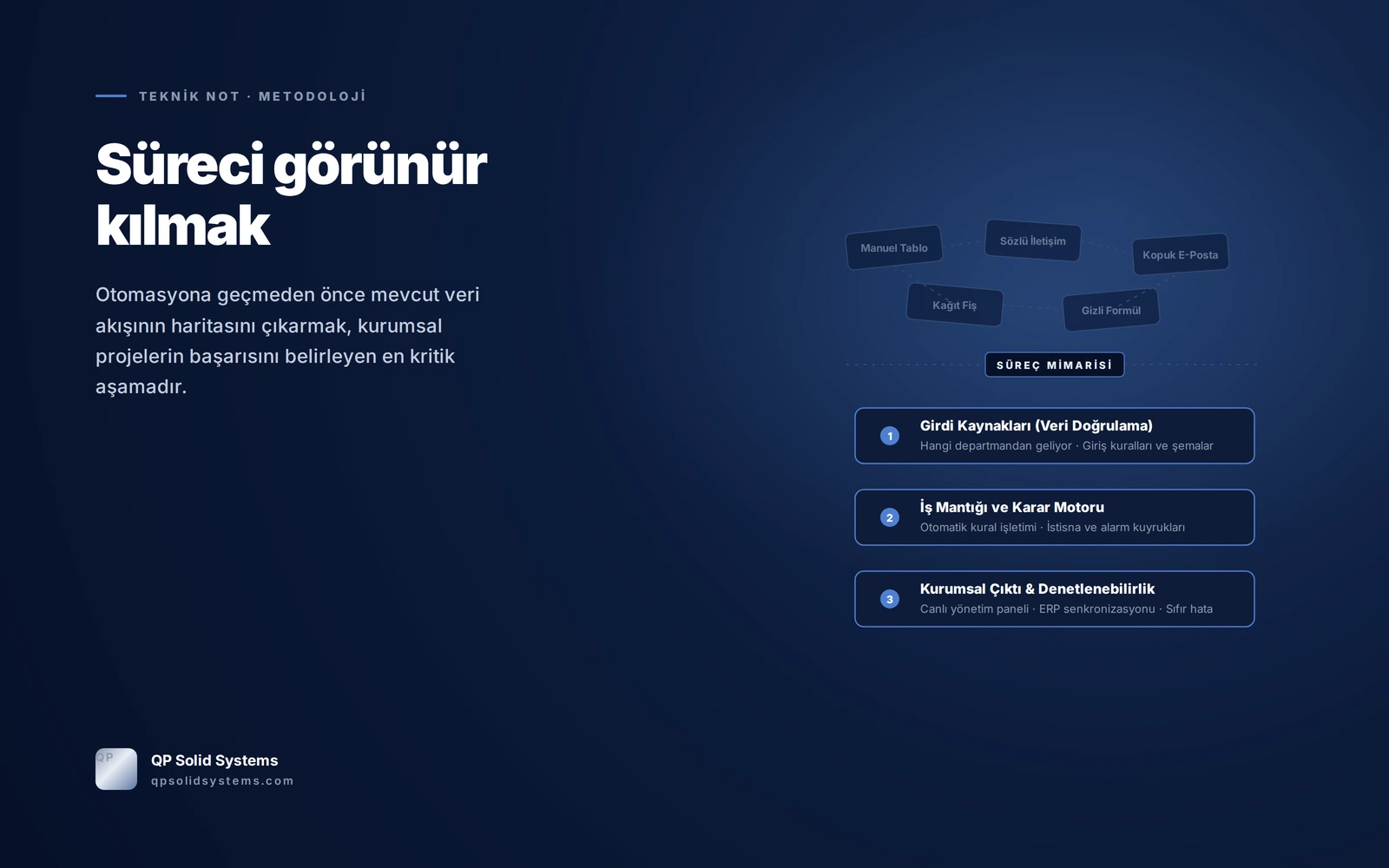
The most common mistake in enterprise process automation is choosing a tool before understanding the flow. A software decision cannot stand in for a process decision: automating an invisible process only speeds up the mess you already have.
If it is not written down and settled who approves an invoice, on what condition a discount may be given, or which warehouse faulty goods are moved to, then even the most expensive ERP installed on top of that will only produce the crises faster.
The three layers of making a process visible
Before writing software or integrating an off-the-shelf system, the anatomy of the operation should be mapped with three questions:
Input layer: where does the information come from, and how?
Every piece of data entering the system has a known source: a customer form, an email, an order sent over a messaging app, or a barcode scanner in the field. Whether that source can be verified is tested.
Decision layer: is the rule in a person's judgement or in an algorithm?
Rules such as "do we ship to a customer who has hit their credit limit?" or "who is alerted when stock falls below ten units?" are settled and encoded into a decision engine.
Output and audit layer: where does the result go?
The delivery note produced, the invoice issued or the revenue table handed to management reaches the right place automatically, with nobody having to intervene by hand.
Unplanned automation versus a process architecture
| Stage | Unplanned, rushed approach | QP Solid engineering method |
|---|---|---|
| Process analysis | ✕ Skipped Attention goes straight to interfaces and templates. | ✓ Observed on site The paper, files and steps actually in users' hands are diagrammed. |
| Exception handling | ✕ Breaks down The system jams the moment someone says "that doesn't normally happen". | ✓ Rule matrix Returns, damage and delays each get a defined automatic route. |
| User adoption | ✕ Resisted Staff find the new system hard and quietly go back to spreadsheets. | ✓ Plain interface Clean consoles that do the person's job in the fewest clicks. |
The best automation is not the most sophisticated software. It is an architecture clear enough, and with rules firm enough, that running the process needs as little human intervention as possible.